

For one of the biggest U.S. life/annuity companies, the effects of the Great Financial Crisis of 2008 have only slowly receded. Equitable Holdings, parent of Equitable Financial Life Insurance Company of New York (EFLIC), has just finished shedding old business and even old locations in recovering from the effects of that crisis.
This summer, Equitable Holdings’ methods for improving its balance sheet were questioned in the financial press. Three publications suggested that the company might have undermined its ability to honor guarantees to annuity contract owners and life insurance policyholders.
The publications pointed to a potential smoking gun in the company’s regulatory filings. At the end of 2024, EFLIC appeared to have a surplus ratio of just 0.4%—the lowest of its peers. At the same time, EFLIC had used complicated reinsurance deals to shift business to other insurers.
But there’s more to the story. Equitable is a different company than it was 15 years ago. Its ownership and lead products have changed. It has made asset management and private credit, not life insurance or annuities, its core competency and profit source.
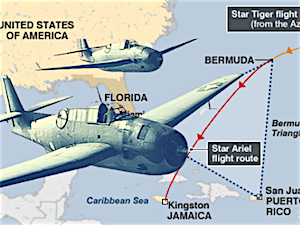
And, last fall, it set up its own reinsurer in Bermuda. In short, Equitable has become what RIJ calls a “Bermuda Triangle” company. Equitable Holdings is now set to run the “capital-light,” private credit–focused business model that so many other life/annuity companies have adopted since 2008.
That makes old-school life insurance mavens nervous. But shareholders seem to approve.
The skeptics’ view of Equitable
To policyholder-minded insurance veterans who have watched the overall life/annuity business become more thinly capitalized over the past decade, Equitable appeared to be conducting a kind of internal leveraged buyout of EFLIC, its own 166-year-old flagship life insurer.
When it reported its 2024 results last spring, EFLIC’s surplus appeared thin enough—only $898 million more than its liabilities of about $230 billion—to call for an intervention by its regulator, the New York Department of Financial Services (NYDFS).
That surplus, as a percentage of liabilities, was thinner than that reported for 2024 by several of EFLIC’s close competitors in the RILA business (e.g., Lincoln National Life, 2.5%, and Jackson National Life, 1.6%), and well below long-standing policyholder-owned mutual life insurers like New York Life (12.1%) and Northwestern Mutual (8.8%).
Something unusual was clearly underway. EFLIC’s surplus was shrinking even as its managers were offloading the insurer’s oldest and most expensive (in terms of capital requirements) books of life insurance and annuity business. Despite reinsurance deals that transferred liabilities to Venerable, First Allmerica, RGA, and EFLIC’s smaller Arizona-domiciled sister company, Equitable Financial Life Insurance Company of America (EFLOA), EFLIC’s surplus fell from $5.6 billion in 2022 to $1.7 billion in 2023.
Though regulator-approved, those reinsurance deals raised red flags at the major ratings agencies. After EFLIC reinsured 75% of its $32 billion in life insurance liabilities with RGA in spring 2024, S&P Global downgraded Equitable Holdings’ stock to negative from stable (though it affirmed high financial strength and credit ratings). Equitable Holdings’ overall “financial leverage” (a reflection of its thin surplus) rose to what S&P Global called “elevated levels.”
The RGA deal made headlines in the reinsurance industry. By lowering EFLIC’s liabilities, that deal released some $2 billion in capital. Equitable Holdings used it to buy back its own stock (another red flag for policyholder-minded critics), enlarge its ownership stake in AllianceBernstein, and put money back into EFLIC.
The transfers of billions worth of assets and liabilities from New York-based EFLIC to Arizona-domiciled EFLOA also raised a red flag to critics. New York’s insurance regulations are famously strict—a legacy of the Armstrong investigation into Equitable’s finances a century ago. Arizona’s, by contrast, are more accommodating. The deal looked to skeptics like questionable regulatory arbitrage—a mostly paper transaction that applied Arizona’s more lenient capital requirements to the same liabilities.
Another red flag in EFLIC’s state filings for 2024: The company disclosed that the NYDFS had exempted its variable annuity-with-income-benefits contracts from New York’s costly Regulation 213 reserving requirement. The exemption lowered EFLIC’s required reserves by $2.3 billion. Without that exemption, EFLIC disclosed, “a risk-based capital regulatory event would have hypothetically been triggered.”
Past disciplinary actions also reflected Equitable’s internal pressure to reduce the carrying costs of its old, capital-intensive VA business. In 2014, the NYDFS fined Equitable $20 million for not disclosing contract changes to variable annuity investors. In mid-2022, the SEC required Equitable to pay $50 million for misleading about 1.4 million variable annuity investors about contract fees.
Suspicion about all of these balance sheet maneuvers—reinsurance with an affiliated insurer, rising leverage, and stock buy-backs—alarmed a group of insurance professionals, led by independent certified fraud examiner and industry critic Tom Gober, whose concerns eventually led to eyebrow-raising articles on Equitable in Capitol Forum, Grant’s Interest Rate Observer, and, recently, Life Annuity Specialist.
Equitable’s metamorphosis
The complete story is more complex. It leads to the Bermuda Triangle.
Equitable Holdings had begun moving the policies and contracts owned by EFLIC customers who lived outside of New York State to EFLOA, domiciled in Arizona. Going forward, EFLOA would issue most new annuities.
This transfer process, spread over a three-year period starting in mid-2023 and overseen by New York insurance regulators, was one piece of a larger strategy—initiated by necessity after the Great Financial Crisis—that would fundamentally remake, restructure, and recapitalize the company known since 1991 as AXA Equitable.
The uncoupling from AXA slowed Equitable’s metamorphosis. As a French company, AXA was regulated by the European Union’s Solvency II rules. The capital requirements for European insurers went up after the Great Financial Crisis, making AXA’s U.S. business prohibitively expensive. AXA’s divestiture of Equitable took three years, concluding in 2020.
Over a period of 15 years, starting in 2010, Equitable (not necessarily in this order):
- Retooled its annuity manufacturing to produce the new RILA product and scaled back traditional variable annuities.
- Began moving capital-intensive older life insurance and variable annuity liabilities off its balance sheet via reinsurance.
- Separated from AXA.
- Conducted an IPO as Equitable Holdings in 2020.
- Raised its stake in AllianceBernstein to 68.8%.
- Opened an operational hub in Charlotte, NC.
- Re-domiciled its flagship annuity issuer in Arizona under the name EFLOA.
- Recently purchased $500 million of its own stock.
- Sent “novation” letters to EFLIC’s non–New York customers regarding transfer of their contracts to EFLOA.
Reinsurance deals were essential to the makeover. Of four major deals, the transaction with RGA was the most significant. Equitable used the released capital to buy back shares, enlarge its stake in AllianceBernstein, and infuse EFLIC with more capital.
Equitable, like other publicly traded top-20 life/annuity companies such as Lincoln and Prudential, was burdened with capital-intensive variable annuities with lifetime income riders sold in the early 2000s. It moved risks of individual contracts to Venerable (affiliated with Apollo Global Management) and risks associated with half of its VA contracts to First Allmerica (affiliated with Global Atlantic/KKR).
EFLIC executed a fourth reinsurance deal with EFLOA in Arizona. This deal, a necessary step in relocating billions of dollars’ worth of EFLIC policies and reserves, was based on “funds withheld” reinsurance, or modified coinsurance. This affiliated reinsurance deal appeared questionable to some observers.
“Funds withheld” reinsurance allows one insurer to transfer liabilities to a reinsurer while keeping the associated assets on its own books—in “trust” for the reinsurer. The first insurer’s liabilities and capital requirements drop, but its assets under management do not. In traditional reinsurance, by contrast, one insurer sells a block of business—assets and liabilities together—to an unrelated reinsurer.
By reinsuring its life insurance policies and traditional variable annuities, Equitable lightened its capital requirements and enhanced profitability. With its added investment in AllianceBernstein, Equitable has shifted its main profit engine toward wealth management and asset management from insurance.
Regarding the Regulation 213 exemption, it applied only to annuities owned by customers outside New York—annuities in the process of novation (transfer) to Arizona.
At the end of 2024, EFLIC appeared to have a surplus slim enough to make policyholders and contract owners fret. To some, the numbers suggested that Equitable was using internal reinsurance to strip EFLIC of capital and stash it in EFLOA. In reality, EFLIC was moving non–New York business to EFLOA (or to other reinsurers). Given the mechanics of funds withheld reinsurance—where assets stay but liabilities move—EFLIC’s balance sheet, temporarily at least, stopped making sense to outsiders.
Representatives of policyholders can’t be blamed for worrying. For years, they’d watched other insurers use financial reinsurance to improve the appearance of balance-sheet health—and increase industry leverage (i.e., reduce their surpluses) to levels that alarmed federal and international watchdogs. Now Equitable, one of the oldest American life insurers, was doing it too.
Equitable enters the “Bermuda Triangle”
In RIJ’s view, Equitable Holdings has adopted, a decade after some competitors, the “Bermuda Triangle” strategy. Equitable describes the strategy as providing the metaphorical action of a “flywheel,” but both terms describe similar models.
Equitable and AllianceBernstein aren’t identical to Bermuda Triangle players like Athene/Apollo, Global Atlantic/KKR, Security Benefit/Eldridge, or American Equity/Brookfield, who focus on FIAs (regulated by states, not the SEC). Equitable remains in its prior peer group of RILA issuers, alongside Lincoln Financial, Brighthouse, Prudential, and Corebridge. Jackson National, Allianz Life of North America, and MassMutual run their own distinct variations on similar themes.
The three essential elements of the Bermuda Triangle are:
- A U.S.-domiciled insurer issuing investment-like, capital-light annuities.
- A Bermuda reinsurer.
- An asset manager arranging private credit deals.
RILAs are Equitable’s capital-light annuities. An AXA Equitable internal “Innovation Hub” is said to have invented the RILA in 2010. Classified as a variable annuity, the RILA is the SEC-registered counterpart of state-regulated fixed index annuities (FIAs). Like FIAs, they let owners use the equivalent of general-account yield (net of expenses) to buy options on market indices. Unlike FIAs, RILAs carry downside risk (to a floor or beyond a buffer), but they also offer higher upside potential.
Once Equitable proved the concept—one that delivered strong sales and low capital requirements—other former VA giants followed. Since 2011, RILA sales have climbed steadily ever since. From 2Q2024 to 2Q2025, Equitable led the RILA market with gross sales of $14.7 billion. The firm’s total individual annuity sales (including RILAs and VAs) were $19 billion with net flows of $6.7 billion.
According to those familiar with Equitable’s strategy, RILAs deliver a “narrower range of outcomes” for the company’s products—outcomes far more predictable than, say, the risks associated with lifetime income guarantees on variable annuities. [The potential cost of those guarantees, to the issuers, was revealed by the 2008 stock market crash.]
Ownership of a Bermuda reinsurer is the second point of the triangle. In late 2024, Equitable Holdlngs set up Equitable Financial Bermuda RE Ltd. In June 2025, the company announced that Bermuda RE would reinsure both general account and separate account liabilities of EQUI-VEST VAs issued outside New York by EFLOA, a major issuer of group annuities for 403(b) and 457 plans.
Roughly in the way a cash-out refinance of a home mortgage at a lower-interest rate can make cash available to homeowners without them having to give up ownership of their properties, reinsurance in Bermuda—thanks to the favorable difference in accounting guidelines there—can make cash available to managers of a U.S. insurer without the company having to give up control over any assets.
The third leg is AllianceBernstein, expected to generate fee revenue from institutional and retail asset management, wealth management, and Equitable’s general account. It will also expand in private credit—financing high-yield loans, sponsoring CLOs, and holding equity tranches of CLOs.
Equitable’s separation from AXA was a mixed blessing: it lost a deep-pocketed backer but gained freedom from conservative investment restrictions. From there, the Bermuda Triangle strategy offered a path to low-risk growth.
Policyholders versus shareholders
Can the contradictory views of Equitable’s financial position be reconciled? Three publications cited data that appears to put the adequacy of EFLIC’s surplus capital—and its ability to honor its guarantees—in doubt. Simultaneously, Equitable claims that the finances of its life/annuity business have gotten healthier. What gives?
There’s no real contradiction here, just two sides of the same coin. The doubters have been looking at Equitable from the perspective of policyholders and contract owners. For policyholders, thinner surpluses signal higher risk. For shareholders, however, they mean higher returns.
Since October 2023, shareholders have rewarded Equitable Holdings with rising prices for its shares. The company’s share price bounced in the $20–$30 range between the May 2018 IPO and October 2023. But it has doubled since then. Last Friday, Equitable shares closed at $53.26.
© 2025 RIJ Publishing LLC. All rights reserved.