
There’s a conflict emerging in life insurance that most advisors are still treating like a product issue. It isn’t. It’s an ownership issue.
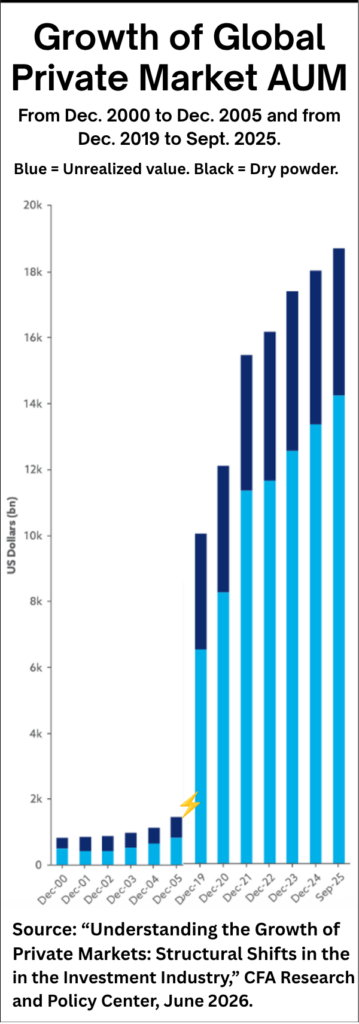
We’re not just watching private equity invest in carriers. We’re watching capital buy carriers, distribution, advisor platforms, and the technology layer, all at the same time.
That’s not “consolidation.” That’s vertical integration of the advice ecosystem.
And when the same capital sits on both sides of the table, manufacturing and distribution, the incentives don’t need to be sinister to be consequential. They just need to be consistent.
The shift most people are missing
The life insurance industry has always had conflicts. Commissions exist. Proprietary shelves exist. Carrier relationships exist. What’s different now is that these conflicts can become structural. They are embedded into the system rather than episodic or individual.
If a PE-backed platform:
- Recruits and supports advisors,
- Provides the tech stack, illustration tools, and workflow,
- Sets grids and “best practices,”
- And has ownership exposure to carriers and distributors…
…Then “independence” becomes something you have to actively engineer, not something you can assume.
This isn’t “bad advisors.” This is The Wire: the system is the main character.
What it looks like in the real world
Here’s a totally normal scenario.
An advisor joins a fast-growing platform. The platform delivers real value. Think compliance support, service staff, marketing, better tech, smoother operations. Clients benefit from that professionalism. Advisors get to spend more time advising. Then the advisor runs an illustration.
The tool defaults to a shortlist of carriers that happen to be “well integrated.” Those carriers also happen to have the strongest economic arrangements with the platform. The platform’s coaching team has a preferred process for product selection, because standardization creates efficiency. The grid is slightly better on certain solutions because scale earns concessions.
No one says, “Push Carrier X.” No one needs to.
The advisors still believe they’re being fully objective. The clients still believe they’re seeing a full market scan. But the rails have been laid… and the train usually stays on the rails.
It’s not a conspiracy. It’s incentive design.
None of these components is automatically unethical. A curated carrier set can be operationally sensible. Preferred pricing can be legitimate scale economics. Coaching can improve consistency and client outcomes. A well-designed UI can reduce errors and speed up service.
But collect enough “sensible” choices in one direction and you end up with something else entirely. Rather than “independent advice” you have a system where the advice pathway is quietly optimized for the ownership structure.
If you think incentives don’t matter, you’re basically the only person who watched Succession and concluded the moral was “communication.”
Follow the money, not the marketing
The pitch works because it’s actually compelling.
I know this firsthand. Before I moved into this industry, I spent years as a lawyer at two top international law firms representing private equity sponsors in acquisitions. These were sophisticated, institutional investors building platform strategies, not dabbling. I’ve sat in the rooms where integration, margin capture, and value-chain control were discussed as features, not bugs.
So when I say the PE playbook makes sense, I mean it.
In the RIA aggregator space, private equity hasn’t just invested capital. It has built operating systems. Firms acquire advisory practices, centralize operations, professionalize compliance, and create scale that individual advisors simply can’t replicate on their own.
At the same time, many of the same PE firms, or firms with overlapping investor bases, have taken stakes in life insurance carriers, reinsurers, and insurance distribution platforms.
The advisor pitch is clean. It’s a shiny gloss of better support, better technology, and better economics.
The investor pitch is even cleaner. Think controlling manufacturing and distribution, capturing margin at multiple points in the value chain, and creating sticky, recurring revenue through embedded financial products.
None of that is controversial. It’s disciplined capital strategy.
What tends to get lost is the client sitting across the table, a client with no visibility into the capital structure behind the recommendation, and often no way to understand how ownership incentives may influence the tools, processes, and defaults shaping the advice they receive.
What this means for advisors
If you’re evaluating a platform, an aggregator, an IMO partnership, or even a “free” tech stack, ask due diligence questions that go beyond the sales deck.
Who owns it two or three layers up? What business relationships are embedded in the tools? How do economics vary across carriers, and why? What data is being collected about your recommendations, and who benefits from that data?
Think of it like underwriting. You don’t just look at the face amount. You look at the structure.
What this means for clients
If you’re a client working with a platform-affiliated advisor, the question isn’t, “Is my advisor honest?” The question is, “What incentives sit upstream of my advisor?”
Am I seeing a true market scan or a curated shelf? Who benefits financially from the product manufacturer, directly or indirectly? What constraints exist in the tools used to compare options?
In complex structures, the answer might be, “your advisor’s advisor’s owner’s portfolio company.” That doesn’t make it wrong. But it makes it worth understanding.
The real gap: what disclosure was designed to catch
Most conflict frameworks focus on transaction-level incentives such as commissions, revenue sharing, fee arrangements. They weren’t built for a world where ownership can connect the advisor platform, the workflow tools, the distribution economics, and the manufacturers.
Oversight is fragmented. Rules often assume a level of independence that increasingly has to be proven, not presumed.
Current disclosure requirements assume independence exists unless proven otherwise. In this environment, it’s the reverse. Independence has to be proven, not presumed. The regulatory framework hasn’t caught up to that reality.
So what actually gets solved?
Yes, PE can bring improvements in terms of better operations, better service, better tech, more consistent processes.
But “better” depends on the objective.
Efficiency for whom? Technology optimized for what outcome? Scale that benefits who?
The best advice starts with the client’s actual problem: estate taxes, succession, liquidity needs, wealth transfer, income replacement. Then it matches the right solution using a process the advisor can explain and defend.
When the solution pathway also optimizes value capture for upstream owners, the advisor has to be able to answer the uncomfortable question, “Is this recommendation optimized for the client’s outcome or for the system’s economics?”
Those goals can overlap. They’re just not automatically aligned.
Where this goes next
This consolidation isn’t slowing down. More platforms will roll up. More carriers will take institutional capital. More “seamless” ecosystems will be built.
Advisors who recognize the shift early have a real opportunity. Be the alternative. Be the advisor who can demonstrate independence with receipts, not slogans.
Show the options you eliminated and why. Explain what your tools can’t compare. Disclose affiliations plainly. Document how the recommendation solves the client’s stated problem.
Independence isn’t a credential anymore. It’s a claim that requires evidence. If you can’t document how your recommendation process stays independent of your platform’s ownership structure, you’re probably not as independent as you think you are.
© 2026 Peter Dziedzic. Reprinted with permission of the author.